
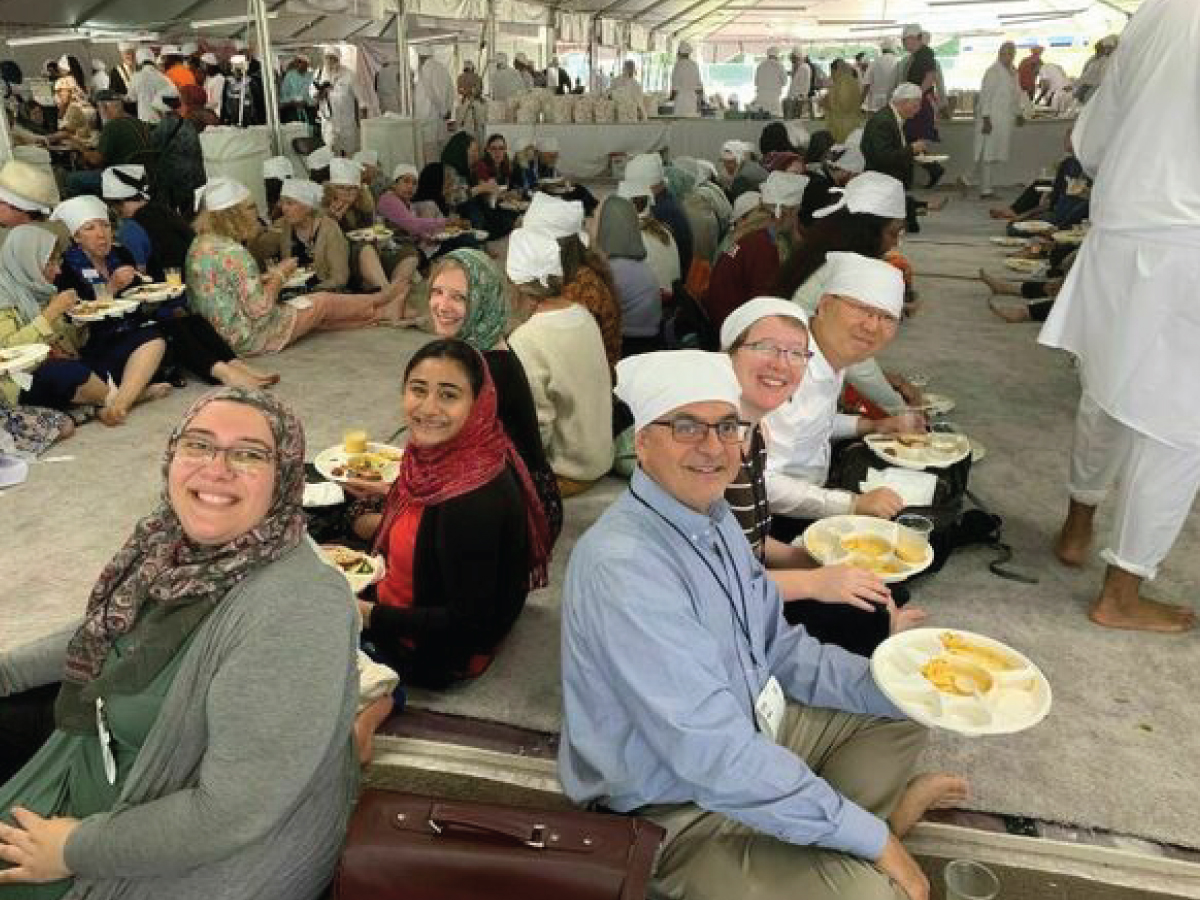
How the Sikh kitchen became a global example of selfless service
The tradition of Langar, or the free community kitchen, is one of Sikhism’s greatest contributions to humanity. Established by Guru Nanak Dev Ji in the 15th century, Langar symbolizes a radical idea: that all human beings, regardless of caste, gender, or wealth, deserve dignity, nourishment, and equality.
Imagine the time when this tradition began. India was deeply divided by caste. Many were denied food, education, or even the right to sit with others. In that climate, Guru Nanak’s act of serving food in a communal setting was revolutionary. By asking everyone to sit together on the floor, Guru Nanak dismantled centuries of social hierarchy. He declared: “The one Lord is within all beings, and no one is without Him.”
Even today, Langar is not about the menu—it is about the message. A simple meal of dal, roti, and vegetables becomes sacred because it is shared in equality. The hands that prepare it belong to volunteers performing seva. The hearts that receive it are united in humility. From Harmandir Sahib in Amritsar, where over 100,000 people are fed daily, to Sikh communities delivering meals during global crises—Langar continues to embody sarbat da bhala, the welfare of all.
When COVID-19 struck and many were left without food or income, Sikh Langars worldwide extended their reach beyond the Gurudwara walls. Meals were delivered to hospitals, care homes, and stranded migrants. In doing so, Langar showed its universal relevance: humanity cannot survive without compassion.
In a world often divided, Langar is proof that a shared meal can heal, unite, and uplift.